Strategic & Technical Energy Advisory
Empowering the Future of Energy
Independent technical, operational, regulatory and commercial advisory for data centers, large loads, generation, utilities and advanced energy infrastructure.
Discuss Your Project65+
BA Certifications Supported
24/7
Control Center Operations
100%
Independent Advisory

Grid 2.0 — Advisory
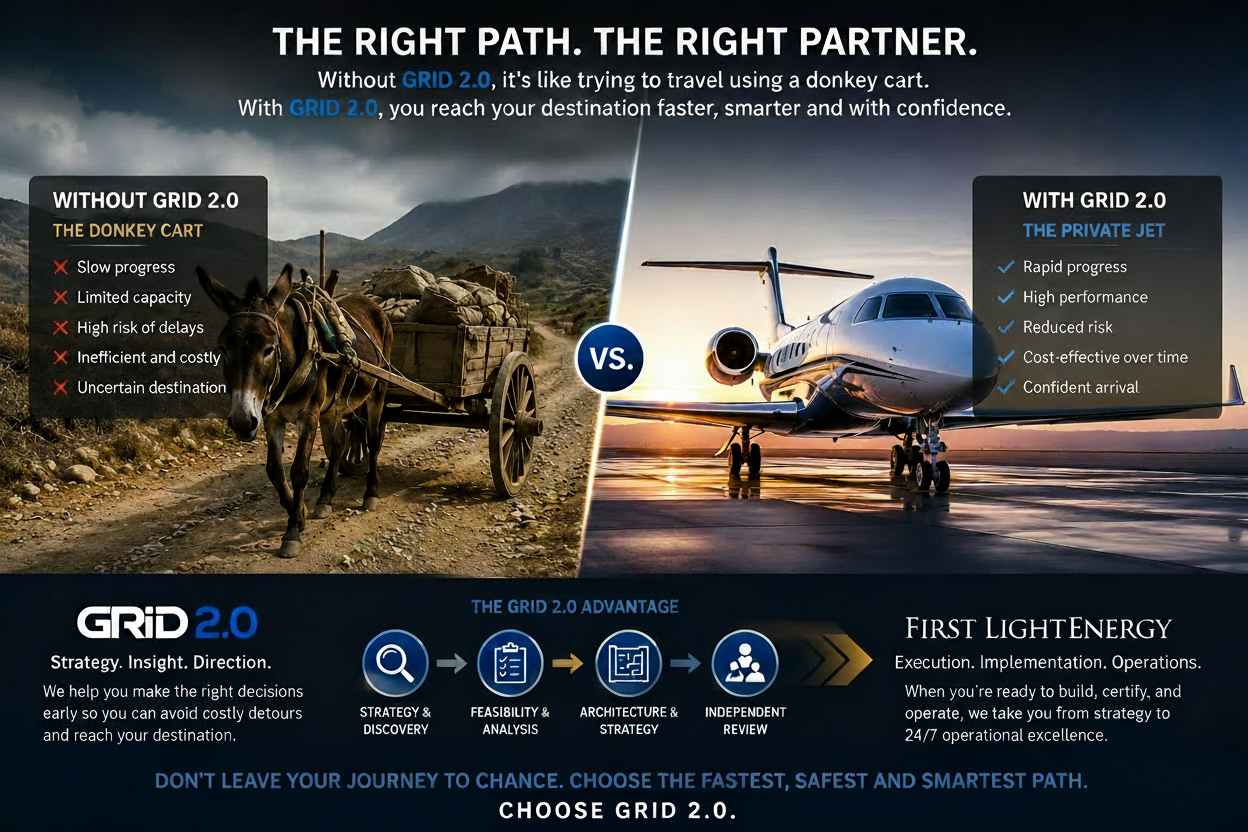
GRID 2.0 helps clients make critical energy decisions before those decisions become expensive infrastructure commitments. We bring real-world electric-system operations, Balancing Authority, transmission, generation, market and regulatory experience to the earliest stages of project development.
First LightEnergy — Implementation & Operations
As the consulting and strategic advisory arm of First LightEnergy, GRID 2.0 can provide independent front-end analysis while giving clients access, when appropriate, to certification, implementation, control-center and 24/7 operating capabilities.

Leadership
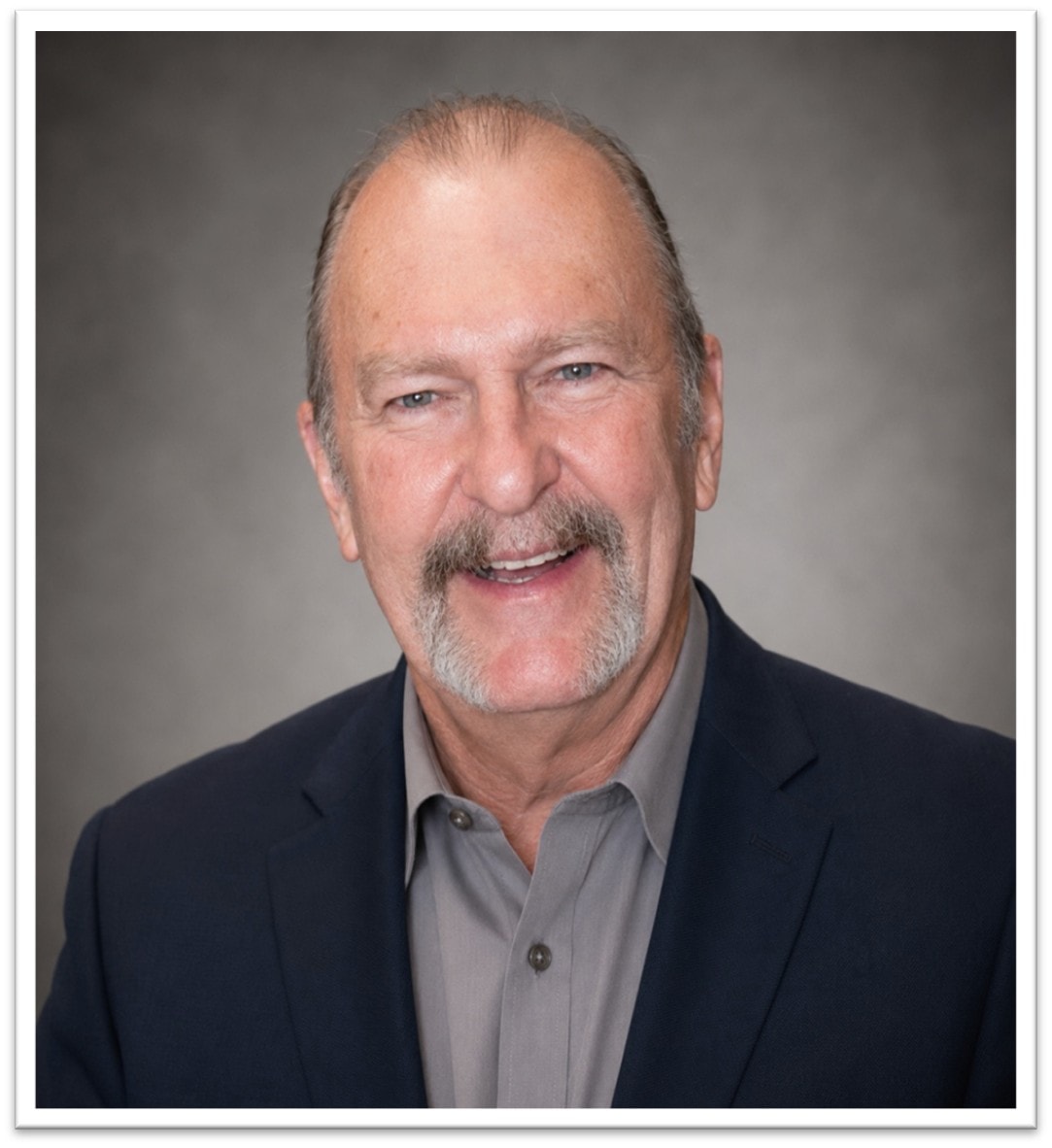
James “JT” Thompson
Founder & Principal Advisor
Grid 2.0
JT Thompson provides Grid-2 consulting services, bringing more than 40 years of leadership and operational experience across the energy industry. His extensive background in utility operations, control centers, energy markets, and grid reliability provides clients with strategic expertise to address the evolving needs of utilities, generation assets, and energy organizations.
JT is also the Founder and CEO of First LightEnergy, which has been in operation since 2016 and provides specialized energy solutions, certification, and 24/7 operations. In fall 2022, JT formally launched First LightEnergy’s Renewable Network Operations and Control Center (ReNOC) expansion, delivering cyber-secure, NERC-certified, around-the-clock services supporting microgrid optimization, Balancing Authority operations, and grid-level transmission. Under his leadership, First LightEnergy has developed strategic partnerships with EnergyIQ, Atwell/NEI Engineering, Larsen & Toubro, Industrial Defender Cyber Security, and other industry leaders.
Throughout his career, JT has built and led utility control centers, energy trading floors, and merchant asset operations. His experience includes municipal utilities in Florida, the Walt Disney World Energy Control Center, and Duke Energy, where he served as Managing Director of the Control Center. The operation was later acquired by Constellation Energy and became Constellation Energy Control and Dispatch (CECD), where JT served as Managing Director for nine years. In 2014, he led the sale of the operation to a private equity group.
JT also served as Senior Advisor for the Baghdad Electricity Segment, where he held responsibility for a $5.6 billion budget and P&L while working in an active war zone. In this role, he advised the U.S. Department of Defense, U.S. Embassy, Coalition Forces, and the Iraqi Ministry of Electricity.
40+
Years in Energy Operations
$5.6B
Budget Managed, Baghdad Electricity Segment
2016
First LightEnergy Founded

What We Do
Six Practice Areas
Data Centers & Large Loads
Energy strategy, reliability architecture, power-supply alternatives, interconnection, dedicated generation, storage, microgrids and operational-readiness advisory for mission-critical loads.
Balancing Authority & Grid Strategy
Feasibility, footprint, resource, control, regulatory and commercial analysis for organizations considering a new or specialized Balancing Authority structure.
Operational Readiness
Owner-side review of whether a proposed electrical system can be reliably controlled, protected, restored and operated under normal and contingency conditions.
Energy & Transmission Advisory
Transmission, interconnection, energy-supply, scheduling, market, regulatory and operating-structure advisory.
Municipal & Utility Advisory
Strategic support for municipalities, cooperatives and utilities addressing control-center modernization, grid operations, generation integration, large-load growth and changing reliability requirements.
Independent Owner's Review
A technically informed second look at engineering proposals, operating plans, vendor scopes, supply agreements and project assumptions before critical commitments are made.
Why Grid 2.0

Responsible Large Computational
Load Development
Data Centers Should Be Built, And They Should Be Built Right
Artificial intelligence, cloud computing, advanced manufacturing, financial systems, communications, medical research and national security are creating unprecedented demand for computational infrastructure. Large data centers are becoming an important part of the nation’s critical infrastructure and an increasingly significant part of the electric power system.
At the same time, communities are asking legitimate questions about electricity consumption, grid reliability, water, noise, land use, infrastructure costs and whether the promised economic benefits justify the local impacts. Those questions deserve substantive answers.
Our position is straightforward: large computational-load facilities can provide significant economic and technological benefits, but they should be developed in a manner that protects electric-system reliability, existing utility customers and the communities in which they operate.
The appropriate question is not simply, “Should data centers be built?”
It is: How do we build and operate them responsibly?
The Responsible Large Computational Load Standard
Protect electric-system reliability.
A large computational load can represent hundreds or even thousands of megawatts of concentrated demand. Its electrical behavior — including rapid load changes, simultaneous equipment trips, UPS transfers and recovery following disturbances — must be understood before commercial operation.
Protect existing utility customers from inappropriate cost shifting.
Transmission, substations, generation and other infrastructure constructed principally to serve a large new load should be supported by appropriate commercial arrangements so that existing customers are not left bearing unreasonable costs or stranded investment.
Design computational load as an operating resource where practicable.
Modern data centers do not necessarily have to behave as passive loads. Battery energy storage, UPS systems, flexible computing workloads, advanced controls and sophisticated energy-management systems can potentially provide controlled load response, ramp management, frequency support, contingency response and other reliability benefits.
Engineer for disturbances, not merely normal operation.
A facility that operates perfectly at steady state may behave very differently during a transmission fault, voltage excursion, frequency event, generation loss or sudden computational-load transition. Large computational facilities should establish clearly defined voltage and frequency disturbance-performance characteristics.
Maintain adequate generation, balancing and contingency capability.
Where dedicated generation or islanded operation is involved, the electrical system must be capable of maintaining the continuous balance between generation and load. Generation reserves, BESS, load-following capability, frequency response, voltage support, contingency reserves, blackstart capability and load-shedding strategies should be treated as fundamental elements of the facility.
Use water responsibly and disclose actual requirements.
Water consumption varies substantially among cooling technologies and facility designs. Communities should receive project-specific information rather than generic industry averages. Developers should evaluate closed-loop, low-water and other appropriate cooling technologies where local water availability warrants them.
Address community impacts directly.
Noise, lighting, visual impacts, backup generation, transmission facilities, traffic and construction impacts should be evaluated and mitigated through engineering and thoughtful site design.
Be realistic about economic benefits.
Large data centers can create substantial construction activity, property investment, tax base and long-term technical employment. Those benefits should be communicated accurately. Communities deserve credible projections, not exaggerated claims concerning permanent employment or economic impact.
Plan for emergencies and abnormal conditions.
Large computational campuses should coordinate emergency procedures with utilities, transmission operators, local emergency responders and other appropriate authorities. Electrical emergencies, fire protection, fuel supply, communications failures, cybersecurity incidents, severe weather and restoration following major outages should all be addressed before commercial operation.
Maintain meaningful community transparency while protecting legitimate intellectual property.
Confidentiality should not prevent communities from understanding the fundamental impacts of a project — expected electrical demand, water requirements, infrastructure responsibilities, environmental impacts, tax contribution, employment expectations and major mitigation commitments — without requiring disclosure of proprietary information.
A Different Model for Large Computational Loads
The electric industry is entering a period in which the traditional distinction between generation and load is becoming less meaningful. A large computational campus may contain generation, battery storage, UPS systems, power electronics, controllable computing workloads and sophisticated real-time control systems. Properly engineered, these resources can work together.
Instead of asking only, “How will the electric system serve this data center?” developers, utilities and communities should also ask: “How can this data center be designed to support the electric system?”
A poorly designed 1,000 MW computational facility can create a significant reliability challenge. A properly engineered 1,000 MW computational energy campus with generation, storage, controllable load, protection, telemetry and sophisticated operating controls can become an active participant in maintaining reliability.
Our Commitment
GRID 2.0 and First LightEnergy support the continued development of America’s computational infrastructure. We also believe that the industry’s long-term success depends upon earning the confidence of utilities, regulators and the communities hosting these facilities.
That means addressing legitimate concerns rather than dismissing them. It means applying the same principles used throughout the electric industry: understand the system; identify credible contingencies; engineer appropriate protection; maintain adequate reserves; protect neighboring customers; prepare for abnormal conditions; measure performance; and continuously improve.
Our objective is not simply to help build larger electrical loads. Our objective is to help build computational infrastructure that communities can support and electric systems can reliably accommodate.
GRID 2.0
GRID 2.0 provides independent engineering and strategic review for large computational-load and energy-campus development. Our work focuses on power-system architecture, design review, operating risk, contingency analysis, generation and storage strategy, control requirements and operational readiness. We help owners and developers identify reliability risks early, while there is still time to engineer the solution rather than manage the consequence.
GRID 2.0 helps determine whether the project is designed right.
First LightEnergy
First LightEnergy brings the operating discipline of the electric industry to large computational-load development. Our capabilities include Balancing Authority certification and implementation, 24/7 operations, EMS/SCADA/AGC integration, balancing and reserve strategies, contingency planning, telemetry and operational-readiness support. We help convert complex computational campuses from large passive loads into power systems that can be monitored, controlled and operated reliably.
First LightEnergy helps make sure it operates right.
Make the Critical Decisions Early
The best time to solve an energy architecture problem is before equipment is purchased, contracts are locked in and construction is underway.
Discuss Your ProjectA First LightEnergy Company

Grid 2.0 is the strategic advisory arm of First LightEnergy, delivering cyber-secure, NERC-certified 24/7 control center services, microgrid optimization, and Balancing Authority operations since 2016.
Explore First LightEnergyContact Us
Start a conversation about your project.
Get in Touch
Whether you are evaluating a new data center, generation project, microgrid, Balancing Authority, transmission strategy or major utility investment, early operating decisions can materially affect cost, schedule and reliability.